
Pepper spray is a compact, non-lethal self-defense tool that fits easily into your everyday carry. Whether you carry a firearm or prefer a simple spray that you can keep on your keys or bag, this collection brings the best pepper spray options like POM and Fox Labs into one place. Choose how you want to carry it - keychain, clip, or home defense - and view specs on each product page to compare range, burst count, and spray pattern.



Who Is Pepper Spray For?
Pepper spray is for anyone who wants a less lethal self defense tool that is fast, simple, and easy to keep on you every day. It’s especially popular as EDC pepper spray for:
- Pepper spray for women who want a discreet option for parking lots, errands, and walking to and from the car.
- Pepper spray for runners and walkers who need hands free carry, plus quick access if someone closes distance.
- College students who want a small self defense tool on dorm or apartment keys for late night walks.
- Travelers and commuters who want a defensive option where carrying a firearm is not possible or not preferred.
- Delivery drivers, couriers, letter carriers, and anyone working alone who wants quick access without taking up pocket space.
If you will not carry it consistently, it will not help you. Pick a model that fits how you already carry your keys, phone, wallet, and bag.
Comparing Pepper Spray Features
Use this quick comparison to match the spray to your daily carry. The right option is the one you can reach fast, every time.
Quick Comparison
| Carry Type | Best For |
|---|---|
| Keychain pepper spray | If your keys are always with you. |
| Clip pepper spray | Pockets, waistbands, purse edges, backpack straps. |
| Holster style | Belts and duty style setups. |
| Other models | Check each product page for carry options, range, burst count, and safety. |
Understanding Pepper Spray Strength and Effectiveness
When you compare pepper spray strength, you’ll usually see OC percentage, Scoville Heat Units (SHU), and sometimes “major capsaicinoids.” Those numbers can be helpful, but they are not always reported the same way across brands. It’s easy to assume higher numbers automatically mean a better product, but that's not always the case.
Oleoresin capsicum (OC) is the active ingredient derived from hot chili peppers. The OC percentage tells you how much OC is in the formula, but it doesn’t always tell you how intense the effect will be. That’s because OC is a mixture, and the amount of the “hot” components inside it can vary.
“Major capsaicinoids” refers to the specific compounds that drive the burn. Some brands list that number because it can be a more direct indicator of the active “heat” than raw OC percentage alone.
Scoville heat units (SHU) is often used as a pepper spray heat rating, but companies may cite different SHU values based on the raw pepper resin vs. the final spray formula. SHU can be a rough indicator, but not a perfect apples-to-apples comparison.
For everyday carry, pepper spray effectiveness comes down to consistency, spray pattern, range, and a safety you can operate under stress, not just the biggest number on the label. Here are a few things to consider when looking for pepper spray:
- Reliability and consistency: You want a proven formulation and quality control. Look for a product that’s manufactured to specific standards and tested by a third party.
- Spray pattern and range: This can affect how well you can deploy it under stress. If the range is too short or the spray pattern is too wide or too narrow, it limits the spray’s usefulness.
- Safety features: Avoid accidental discharge in your pocket or bag. Look for a lock on the spray to prevent accidental discharge (you can add more safety with different carry methods, like a holster with a velcro or snap flap).
- Expiration date and canister integrity: Old cans can lose pressure. Regularly check your spray and discard it (safely) when it reaches the expiration date.
If you focus only on “big numbers,” you can end up with something that looks impressive on paper but doesn't have the stopping power for real-world everyday carry.
When to Choose Pepper Spray vs. Other Self-Defense Options
Pepper spray is a strong option when you want distance, simplicity, and a tool you can carry daily. If you compare pepper spray vs other self defense tools like stun guns or electronic devices, spray is usually lighter, faster to deploy, and does not require charging.
Pepper spray is also typically easier to carry and conceal, and generally more affordable. It’s designed to create a short window to break contact and escape.
If you’re weighing pepper spray vs taser style devices, the biggest trade off is contact and complexity. Many electronic tools require closer range and more upkeep. Pepper spray can work from farther away, but wind and bad angles matter.
Many times, people will say “mace” when they mean pepper spray. Pepper spray is the product type that uses OC from peppers, and Mace is a brand. While some Mace products use OC pepper spray, sometimes it's combined with other agents. For deeper comparisons, read Mace vs pepper spray.
Overall, pepper spray makes sense if you want affordable, everyday carry protection that helps you create space and leave. It's is a good choice when you want:
- A less-lethal self-defense tool that’s lightweight and easy to keep with you
- A straightforward option that doesn’t require ongoing charging
- Something you can carry in multiple daily contexts (walking, commuting, errands, travel, where allowed)
Self Defense Pepper Spray Usage and Maintenance Tips
Self defense pepper spray only works if it’s on you and ready. Carry your pepper spray canister consistently in an accessible spot, check the safety, and replace it before it expires. Simple habits like inspecting the canister and practicing your draw are basic pepper spray maintenance that helps you use the best pepper spray for your routine with confidence.
The best pepper spray for you is one you can use even during times of stress without fumbling for a safety or wondering how it works.
How to Store Your Pepper Spray
For pepper spray storage, keep it in a cool, dry place. Avoid long heat exposure like a car, and make sure the safety can’t be bumped open in a pocket or purse.
Practice and Training
Use an inert unit if available. Build a quick draw habit and practice aiming. Pepper spray training should include unlocking the safety and short, controlled bursts. Create a habit of keeping it in the same spot every day.
Legal Considerations for Self-Defense Spray
Pepper spray legal rules vary by state and city. Make sure you know the state and local laws that apply to you, especially if you travel. If you’ve ever asked, “Is pepper spray legal?”, restrictions, like size limits, vary by state and locality. Our state-by-state self-defense weapon guide is a good place to start when deciding on an EDC spray.
Shipping Pepper Spray
Pepper spray shipping rules can vary a lot. The carrier and destination are the two most significant factors. If you’re ordering online, check the seller’s shipping limitations and plan ahead, especially if you’re sending it to a workplace or traveling soon.
Pepper spray will not replace good awareness and avoidance, but it can add a simple, less-lethal defensive option to your everyday carry when you cannot or do not carry a firearm.
Selecting a Quality Pepper Spray Brand & Spray Top
A quality pepper spray starts with a proven OC formula and consistent manufacturing. Look for clear spec sheets, expiration dating, and a canister built for everyday carry. If you’re shopping by reputation, focus on a best pepper spray brand that publishes real details, not just marketing numbers. Reliable options include police strength Fox Labs, POM, as well as SABRE, Mace, ASP Defender Spray, and others.
The most effective spray formulas include oleoresin capsicum (OC) as the primary ingredient. You’ll see “OC” on labels and spec sheets. You want a brand that doesn’t have a lot of inconsistency across its manufacturing and that offers detailed ingredient information.
Next, choose pepper spray spray tops that match how you carry and how you expect to deploy under stress:
- Twist lock/twist top: Good for pocket or bag carry. You rotate to unlock it, which helps reduce accidental discharge.
- Flip top/cap top: Fast access with a thumb press. Look for a cap that stays closed in a pocket.
- Trigger grip: A “point and press” feel that some people find easier to control.
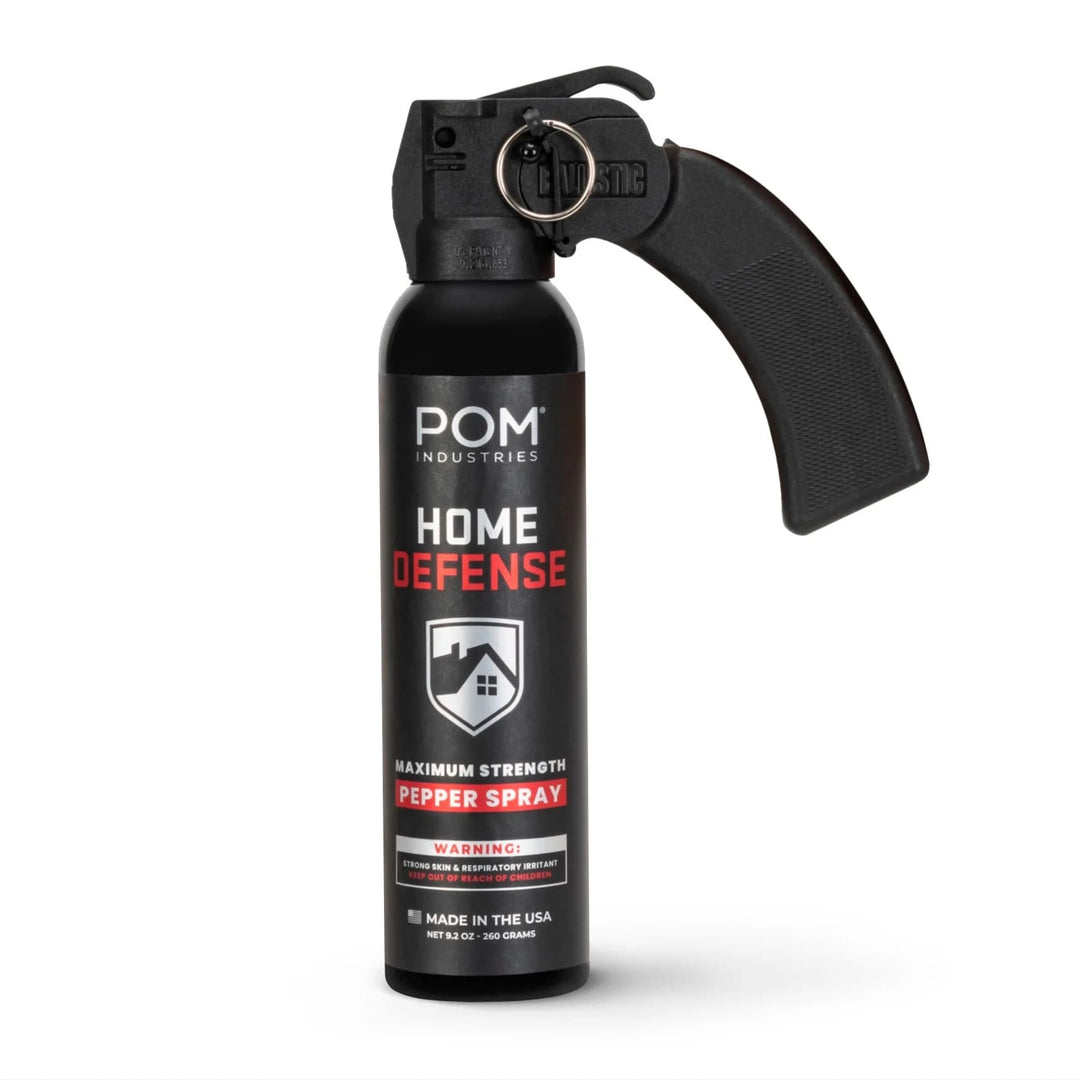
- Pistol grip: Often easier to aim, but usually larger and less discreet for EDC.
Then check pepper spray spray patterns. Stream patterns tend to be more precise and can reduce blowback compared with wide range fog patterns. Also compare range and burst count so you can create space and follow up if needed.
Want an easy starting point? Check out the full pepper spray collection that includes trusted options from POM and Fox Labs.
Why Premier Body Armor Offers Pepper Spray & Defense Spray
We think about personal safety as layered protection, not a single tool or weapon. Body armor is a defensive layer that helps protect you without requiring you to use force. Pepper spray is similar. It’s a less-lethal tool that can create space and help you leave a situation fast. It also makes sense alongside a firearm, since not every problem calls for lethal force.
As a family company, we carry pepper spray because it’s a practical everyday carry defense option for people who don’t want to carry a gun, older family members who prefer something simpler, and those who are not old enough for CCW.
How to Choose Your Pepper Spray
There’s no one-size-fits-all solution when it comes to every day carry defense spray. Follow the steps below to make an informed choice.
1. Pick your carry style
- Keychain pepper spray: Attaches to your keyring or lanyard so your spray is always with your car and house keys. Great if you rarely leave home without your keys.
- Clip pepper spray: Clips to a pocket, waistband, purse, or backpack strap, keeping the spray upright and ready to draw with a natural thumb position.
- Other carry options: Some models may offer different body shapes, grip textures, or attachment points so you can match your spray to how you already carry your gear.
2. Look at performance details
Each product page in this collection lists exact specs, but here are the key details to compare:
- Range: Most defensive sprays in this collection are designed to reach realistic self-defense distances so you can create space instead of wrestling in contact distance.
- Number of bursts: More available bursts give you margin for multiple threats or follow-up sprays if your first shot is off target.
- Spray pattern: Stream patterns focus more on accuracy and help reduce blowback in the wind compared to wide fog-style sprays.
- Heat rating (SHU/strength): Some product pages list Scoville Heat Units (SHU) or capsaicinoid percentages so you can understand how “hot” the spray is intended to be.
- Safety design: Features like flip-top safeties or protected nozzles help reduce the chance of accidental discharge while staying fast to deploy.
3. Match it to your everyday carry
Your pepper spray only helps if you actually carry it. Choose the model that best fits how you already move through your day:
- Keep it on your keys if those are always in your hand or clipped to a belt loop.
- Use a clip-style spray if you prefer pocket carry, purse carry, or a backpack strap.
- Pair it with the rest of your EDC setup so drawing the spray feels natural and repeatable under stress.