










Understanding Body Armor Requirements for State Troopers
Many state police agencies mandate that sworn officers wear body armor while on duty. However, not all police body armor is the same, and agency requirements vary significantly from one to the next.
Requirements may come from state policy, agency policy, grant conditions, procurement specifications, or a combination of those factors. State patrol agencies most often fund armor through state capital budgets, cooperative purchasing contracts like Sourcewell, and federal grant programs such as Byrne JAG, with the Patrick Leahy Bulletproof Vest Partnership (BVP) more commonly used by smaller local departments. Whichever funding path applies, individual fit and sizing, mandatory wear documentation, and replacement planning are important parts of procurement.
When selecting a bulletproof vest for police duty, agencies weigh several requirements. In many cases, state trooper bulletproof vests have to 1) meet NIJ certification standards, 2) appear on the NIJ Compliance Products List at the time of purchase, and 3) be individually fitted to the officer.
Beyond certification, departments may need a written mandatory wear policy that stipulates when officers have to wear armor, what exemptions exist (if any), and how the department handles replacements when a vest reaches its end of service life.
Protection Levels: What State Troopers Need to Know
Which protection level does a trooper actually need? Ballistic protection levels indicate the test threats a vest or plate is designed and certified, or tested, to address, helping you choose vests based on the threats troopers are realistically likely to face. NIJ Standard 0101.07 is the updated ballistic body armor standard, and it works with the newer HG and RF protection level terminology.
Under the updated NIJ terminology, HG ratings refer to handgun threat levels, while RF ratings refer to rifle threat protection levels. Agencies may still see legacy Level II, IIIA, III, and IV terminology on NIJ 0101.06-certified models during the transition. When comparing ballistic protection levels, confirm which NIJ standard applies to each model and whether it appears on the current Compliance Products List.
For most state troopers, a concealable soft armor vest rated for handgun threats covers daily patrol. Rifle-rated hard plates in a carrier are usually reserved for tactical situations, active threat response, or high-risk assignments. It's important to tie ballistic protection levels to the threats troopers are most likely to see, rather than defaulting to a protection level without a defined use case.
Note: NIJ 0101.07 is the updated ballistic-resistant body armor standard, but many agencies will still see 0101.06-certified models during the transition period. Always verify the applicable standard and current CPL status for the specific vest model being purchased.
NIJ Standard Crosswalk: 0101.06 to 0101.07
How legacy protection levels map to the updated NIJ terminology, with typical state patrol applications.
| Legacy (NIJ 0101.06) | Updated (NIJ 0101.07) | Common Use Case for State Patrol |
|---|---|---|
| Level II | HG1 | Daily concealable wear, handgun threats |
| Level IIIA | HG2 | Daily concealable wear, expanded handgun threats |
| Level III | RF1 | Rifle threats: patrol response, tactical |
| Level III+ (special threat) | RF2 | Green tip / 5.56 special threats |
| Level IV | RF3 | Armor-piercing rifle threats: tactical |
Always verify the applicable NIJ standard and current Compliance Products List (CPL) status for the specific model being purchased.
Concealable vs. Overt Vests for State Patrol Operations
Choosing between concealable bulletproof vests and an overt tactical carrier depends on assignment, wear time, and threat profile.
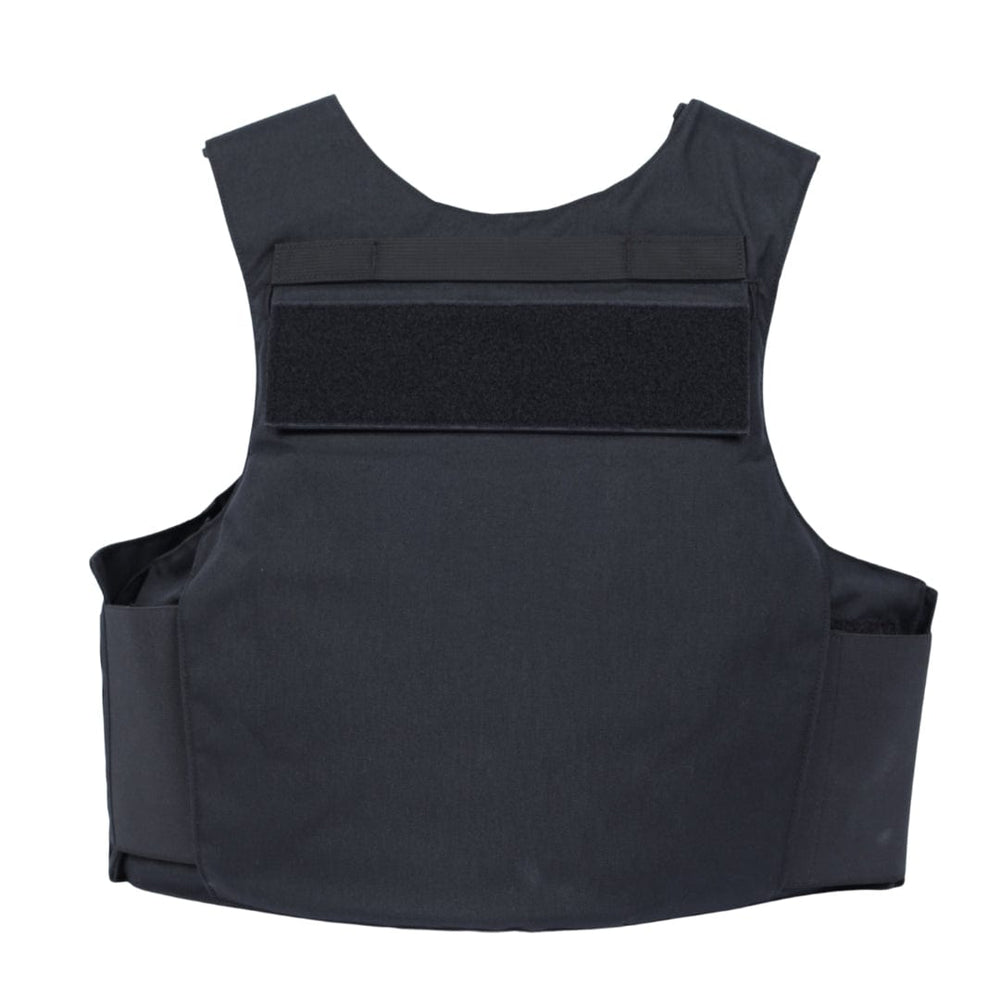
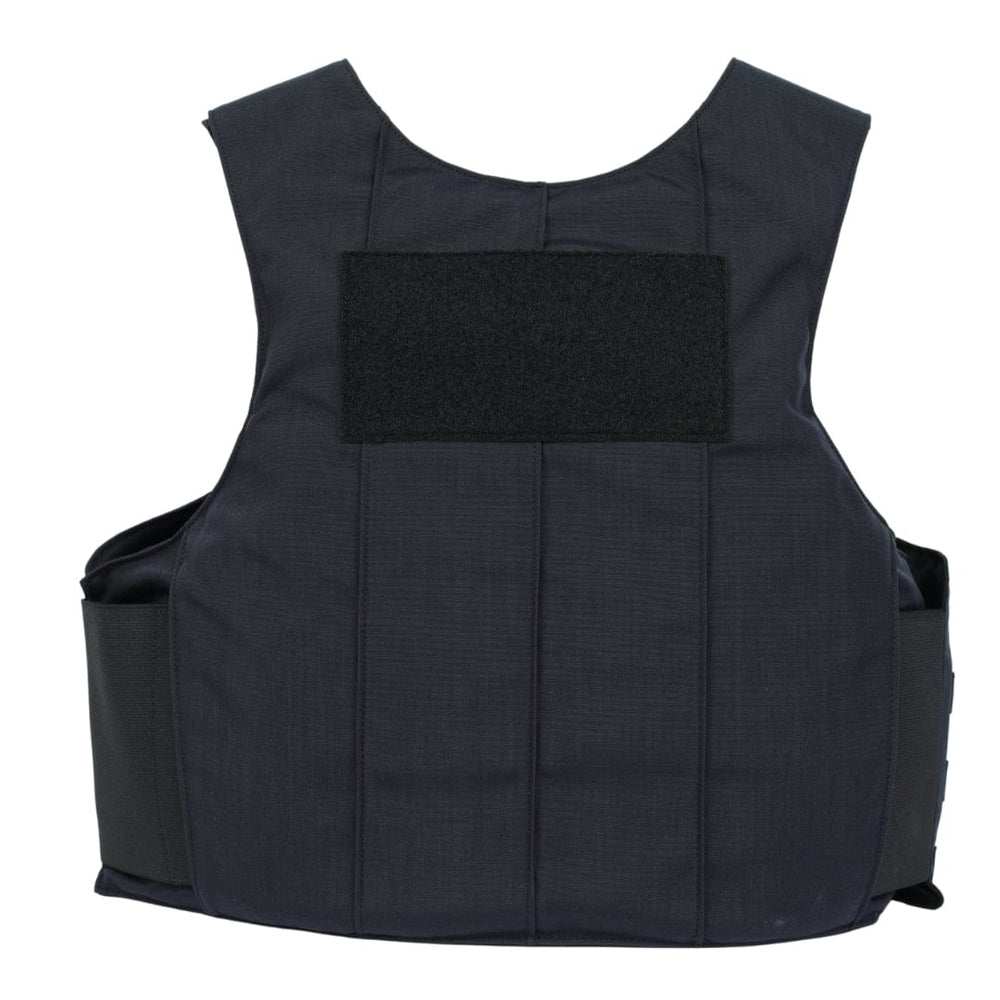
Concealable vests are worn under the uniform. They're the standard for most state patrol operations and are designed for all-day wear, which means they're lighter, lower-profile, and less fatiguing over a long shift. For troopers spending the majority of their time in a vehicle or conducting routine traffic enforcement, a well-fitted concealable vest is typically the right call.
A police plate carrier is the typical overt platform. Overt carriers go outside the uniform. That means they're better for high-visibility operations, tactical callouts, or situations where plate inserts are part of the loadout. They're easier to get on fast, and most let officers carry additional gear, but they're not typically designed for the extended daily wear the way concealable vests are.
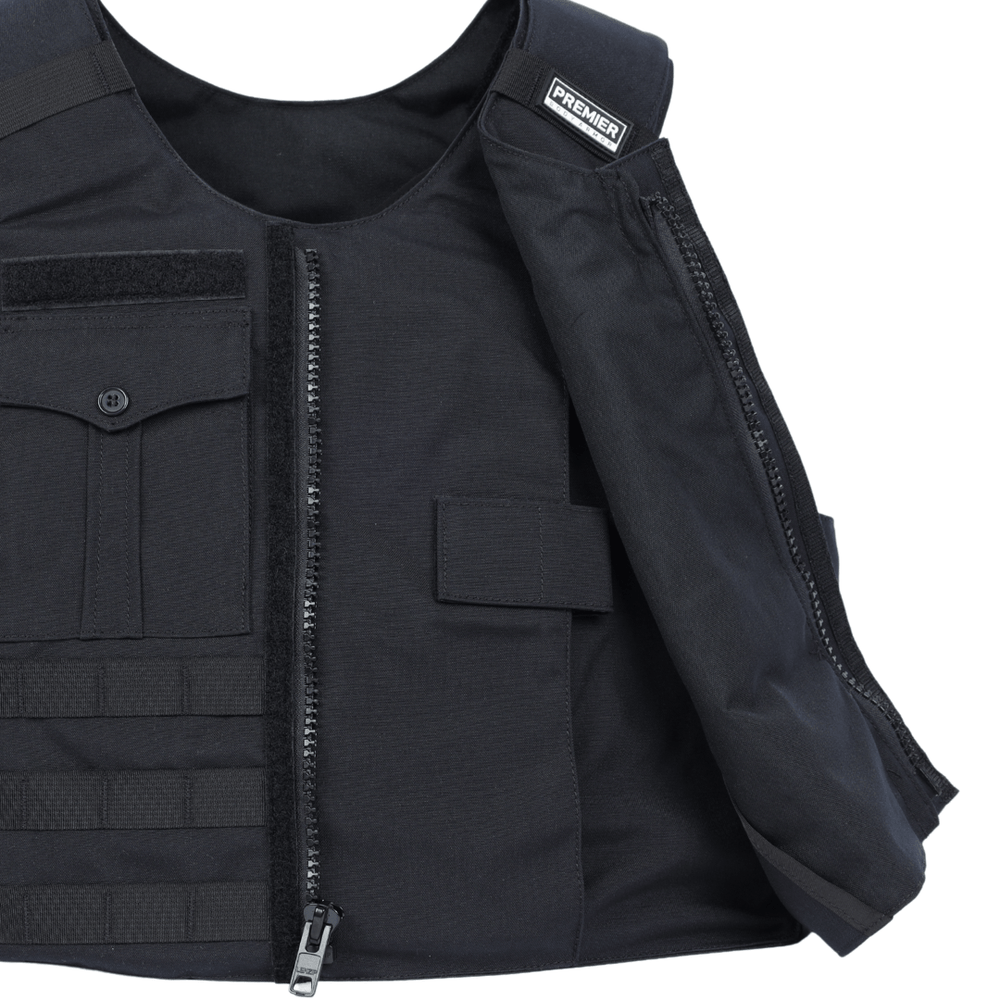
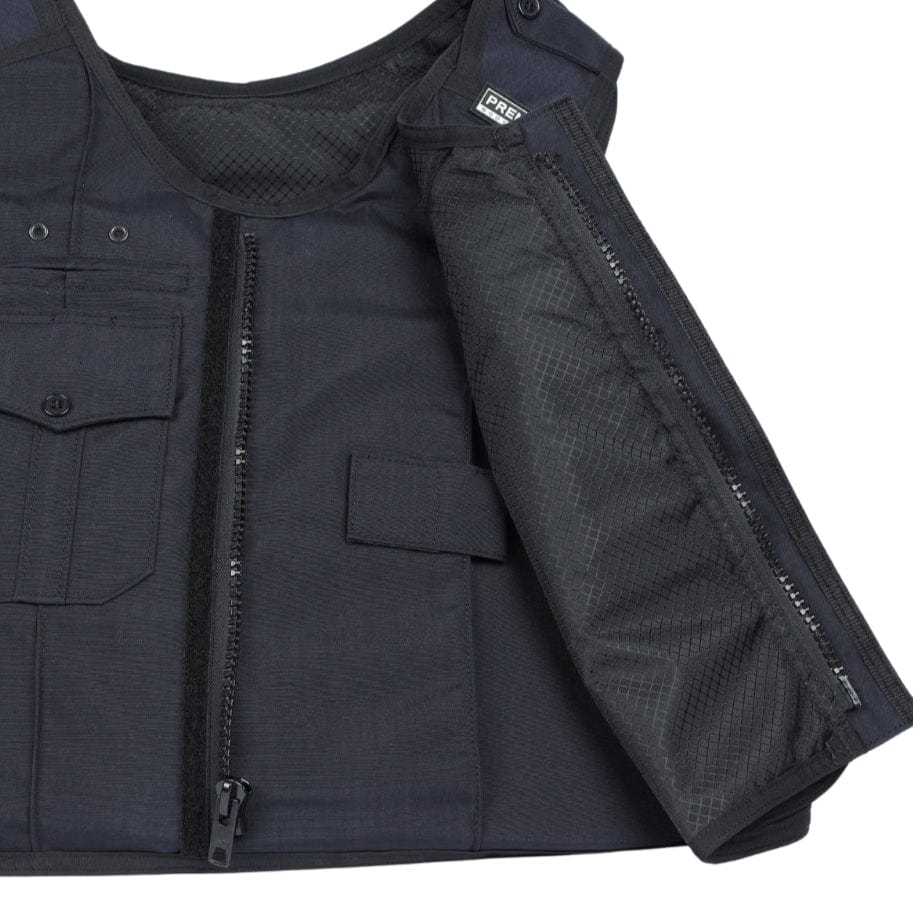
Concealable soft armor is commonly used as the daily standard for state trooper protective gear, with overt options available for specific assignments. Premier Body Armor's law enforcement patrol vests cover both configurations, with options sized and certified for departmental issuance.
Essential Features of the Best Body Armor for State Troopers
Not all NIJ-certified armor is the same. Within a given protection level, state trooper body armor varies a surprising amount, and those differences matter over the course of a five-year service life spent in a patrol vehicle, on foot, and in every condition in between.
The features that separate basic armor from the right armor tend to fall into a few categories: how well the vest fits and moves with the officer, how effectively it connects to real-world patrol needs and the rest of the duty loadout, and whether it can be upgraded when the situation or threat calls for it. Durability is another big consideration, because armor that degrades before its replacement cycle ends may not provide the intended service-life value, no matter what its ballistic rating might be.
When evaluating ballistic vest features, agencies should look beyond the protection level and also consider fit, adjustability, carrier layout, plate compatibility, and service-life planning.
Comfort and Fit
Adjustable body armor makes the difference between a vest that gets worn every shift and one that gets left in the locker. State trooper armor needs to fit securely across different types of bodies, and it has to handle the physical demands of patrol, like entering and exiting vehicles, long hours spent sitting, and occasional foot pursuits. Look for side adjustability, shoulder strap flexibility, and custom sizing options that give you a truly individual fit.
Premier's soft armor lineup gives state agencies several fit and weight profiles to choose from. Pro-Air is the premium comfort option with one of the lightest panels in its class, available in male and female cuts at both Level II and Level IIIA. Pax II is a value-tier Level II option for daily concealable wear, and Argus delivers Level IIIA protection in a competitively priced level IIIA vest. All are NIJ 0101.06 certified, with female-specific designs offered for proper fit on women officers.
Load Bearing & Accessibility
Troopers carry a lot of gear, and the vest should support loadout without interfering with coverage or comfort. MOLLE webbing and compatible accessories for a bulletproof vest let officers configure their loadout without sacrificing armor coverage or comfort. State trooper MOLLE accessories, from radio clips to document pouches, should attach cleanly to the carrier without shifting panel position or creating pressure points during extended wear.
Plate Compatibility
Many soft armor vests include plate pockets for hard armor upgrades when the situation calls for it. 10x12 plates are a common option for front and back coverage, while 8x10 plates may work for smaller frames, compact setups, or certain carrier configurations. Hard armor plates are typically engineered with integrated blunt-force handling, though some carriers include a dedicated trauma pad pocket for additional cushioning at the wearer's discretion.
Body Armor Durability
State trooper bulletproof vests are an investment that has to hold up to daily patrol conditions. Durable body armor should be able to handle heat, moisture, and constant movement. Body armor replacement should be built into your agency's procurement cycle before vests reach their end of service life. Premier Body Armor's law enforcement duty gear is built to perform across the full service life of the vest.
State Trooper Armor Procurement Through LEOnline®
Outfitting a state police agency isn't a one-time purchase; it's an ongoing procurement cycle that accounts for new hires, replacements, policy changes, and documentation requirements.
LEOnline® is Premier Body Armor's purpose-built law enforcement body armor procurement platform for agencies managing departmental issuance. It simplifies the ordering process from roster to delivery, handling individual sizing, tracking assignments, and providing order details, fitting records, quote documentation, tracking information, and invoice support that can help with internal records, reimbursement files, and replacement planning.
For state trooper protective gear specifically, that means less time spent coordinating between quartermaster, HR, and finance, and the knowledge that every officer is issued armor that fits, is properly documented, and meets NIJ standards.
If your agency is approaching a replacement cycle, onboarding new recruits, or getting ready to submit a grant application, LEOnline® can help with every step, from procurement to sizing and documentation. We work directly with state agencies to build purchase plans that fit your timeline and budget.
"LEOnline has been a success at our office. We're using LEOnline to fit deputies remotely; it's been easy and the sizes are spot on. I'd fully recommend PBA to any office looking for a better way to procure their armor."
— Chad Hawkins, Gaston County Sheriff
Why State Patrol Agencies Choose Premier Body Armor and LEOnline®
State trooper body armor has to meet a high bar, including NIJ certification, individual fit, documented issuance, and consistent availability, all on a replacement cycle that doesn't have room to accommodate bottlenecks during procurement or budget shortfalls. That's what Premier Body Armor's LEOnline® program is built for.
Law enforcement body armor procurement through LEOnline® gives state agencies a structured, repeatable process for ordering, sizing, and documenting armor. Premier Body Armor offers NIJ-certified duty armor options, Berry-compliant (Berry Amendment: U.S.-made materials) products where required, and product-specific documentation to support agency purchasing requirements. During the quote process, your agency can confirm which models meet your certification, sourcing, sizing, and policy needs.
Beyond the gear itself, we work directly with state patrol agencies to make sure procurement fits with grant requirements, mandatory wear policies, and replacement schedules, so certification, fit, documentation, and replacement planning are addressed early in the procurement process.
Ready to outfit your agency with armor built for state patrol duty? Build your vest in the LEOnline® vest builder for an instant quote, or contact our team directly to schedule a virtual fitting session and walk through purchase planning for your roster, timeline, and budget. From fit to delivery in six weeks, all backed by a fit guarantee.
frequently asked questions
We will sell body armor to civilians, Law Enforcement Officers, and Military Personnel in the United States who meet the following criteria:
1. Are 18 years of age or older
2. Are not a felon;
3. Are legally allowed to possess and use the item(s) in your state (If you are a New York or Connecticut resident, you must be active Law Enforcement or Military Personnel and provide necessary credentials);
4. Are purchasing this product for only lawful purposes;
5. Are purchasing this product on your own behalf;
6. Comply with all other Terms & Conditions.
Learn more about the legality of body armor in each state.
STRATIS Plates have an 8-year warranty. Fortis plates have a 7-year warranty. Soft body armor panels (for vests and backpacks) have a 5-year warranty, and each carrier has a 2-year warranty.
For warranties on specific products, please see the product page.
All products (excluding clearance items) are eligible for an easy return or exchange if initiated within 30 days of receipt, and the product(s) is in new, unused condition.
There is no re-stocking fee for returns or exchanges. The customer is responsible for any return shipping costs associated with returning the product.
Read more about our returns & exchange information.