



5 products





Maximum Rifle-Rated Protection with Lightweight Options
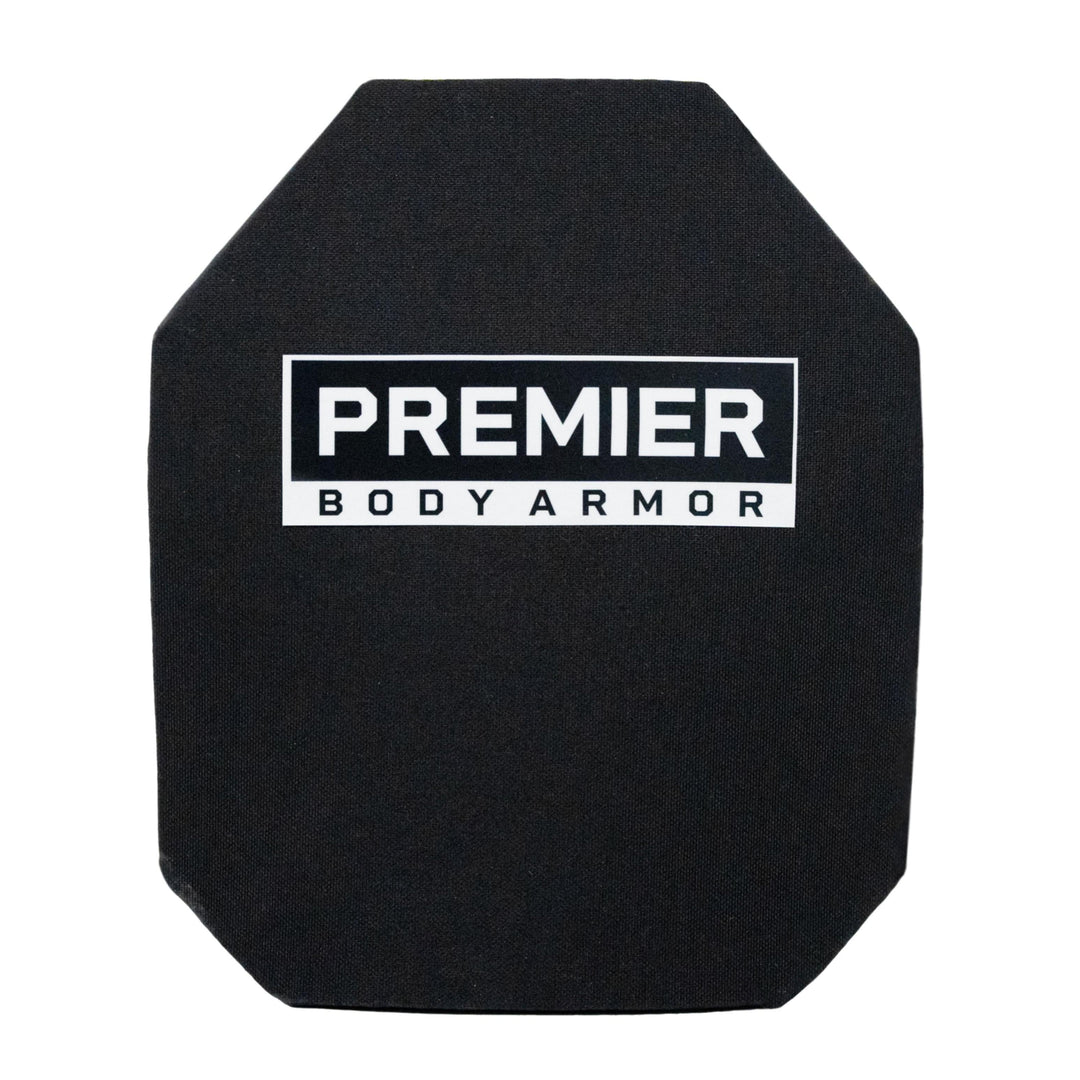
Level 4 body armor, also called Level IV body armor or rifle plates, is the highest rifle-rated protection the NIJ writes a standard for. Our Fortis IV/RF3 Multi-Curve plate delivers multi-hit, UHMWPE-core Level IV protection from $199.95, stopping armor-piercing rounds like .30-06 M2 AP. Every plate here is tested to meet, or certified to, the NIJ 0101.06 Level IV standard, so families, travelers, and prepared citizens can build a rifle-rated loadout with confidence. Pair a plate with a carrier and you’re ready for the most extreme common rifle threats. Plates are sold individually.
What Does Level 4 Body Armor Stop?
Level 4 body armor is built to stop the heaviest rifle threats the NIJ rates. Under the NIJ 0101.06 standard, a Level IV plate must stop a hit from .30-06 M2 armor-piercing (AP) ammunition. In practice, a plate that defeats M2 AP also stops lower-energy rifle rounds such as 5.56 M855 (“green tip”), 7.62x39, and 7.62x51 (.308), along with all handgun threats.
Premier’s Level IV plates are multi-hit capable, and several are special-threat tested against additional rounds; each product page lists its full ballistic test results. To see how Level IV compares with Level III and the rest of the scale, read our guide to body armor ratings.
Premier Body Armor’s Level IV plates have been additionally tested to withstand the following:
- 7.62×39 123gr PS Ball (MSC)
- 7.62×51 147gr FMJ (M80) – up to 2850 ft/s
- 5.56x45 55gr (M193) - up to 3150ft/s
- 5.56x45mm 62 grain steel core (M855)
- 5.56x45mm M855 A1

Level IV and the New NIJ 0101.07 Standard (RF3)
The NIJ is transitioning its body armor standard from 0101.06 to the newer 0101.07. Under 0101.07, rifle threats are designated as RF1, RF2, and RF3, where RF3 is the highest rifle level. RF3 corresponds to the same .30-06 M2 AP threat that defines Level IV under 0101.06, so an RF3 plate and a Level IV plate are built to stop the same class of armor-piercing rifle round.
As the NIJ publishes its 0101.07 Compliant Products List, RF3 designations will follow. To go deeper, see how RF1, RF2, and RF3 compare and how 0101.07 differs from 0101.06.
How Level 4 Body Armor Is Made
Level IV protection comes from hard armor plates, and the materials inside a plate determine its weight, thickness, and how many hits it can take. Most Level IV plates combine a hard strike face that breaks up an incoming round with a tough composite backer that catches the fragments. Here’s how the common constructions compare:
| Material | Weight | Multi-Hit Capable | Durability | Notes |
|---|---|---|---|---|
| Polyethylene | Lightest (5–6 lbs) | Yes | High | Lightweight, multi-hit capable plates. Needs ceramic or silicon carbide strike face. |
| Ceramic | Moderate (6–8 lbs) | No | Low (single hit) | Shatters on impact, requires replacement after hit. |
| Steel | Heaviest (8–10+ lbs) | Yes | High | Thin, but heaviest option, spall risk, less energy dispersion. |
Level 4 / Level IV Ceramic Plates
Fully ceramic plates are now a thing of the past. Today, the most commonly used material for level 4 body armor are a combination of ceramic and aramid fibers, which are woven together and bonded with resin. The result is a hard, lightweight plate that can stop most high-powered rounds.
A hard ceramic strike face (such as aluminum oxide, Al2O3) is what lets a plate defeat armor-piercing ammunition. The ceramic shatters and slows the incoming round; the backer behind it catches what’s left. Ceramic-faced plates deliver Level IV protection at a far lower weight than all-steel construction.
Level 4 / Level IV Steel Plates
Steel plates are another option for level 4 body armor. They are made from high-quality steel and are often coated with a layer of spall liner to reduce the risk of injury from fragmentation upon impact.
Steel plates are thin and durable, but they’re the heaviest way to reach a given rifle rating, and they fragment (“spall”) on impact. If you run steel, add a spall liner to manage fragmentation. Most shooters who want Level IV at a manageable weight choose a ceramic or UHMWPE-core plate instead.
Level 4 / Level IV Polyethylene Plates
Polyethylene plates are the lightest of the level 4 body armor types. These plates are made from high-density polyethylene fibers that are pressed and cut into shape, then layered to form the plate. The result is a lightweight plate that can stop most high-powered rounds.
Ultra-high-molecular-weight polyethylene (UHMWPE) is an extremely light, strong composite. Premier’s Level IV plates use a UHMWPE ballistic core paired with a ceramic (Al2O3) strike face; the ceramic shatters and slows armor-piercing rounds, and the UHMWPE core catches the fragments. This construction is lighter than all-steel plates while meeting the Level IV standard, at roughly 7.4 lb per plate for the Fortis IV/RF3 (sold individually). It’s a strong choice for anyone who wants Level IV protection without the weight of steel.
The downside is that polyethylene plates are more susceptible to damage from exposure to heat and UV radiation. However, it's not difficult to mitigate this by having a good care process in place.
What makes a plate multi-hit capable?
“Multi-hit” means a plate is built to withstand multiple hits from the same or similar rounds without failing. The ability to be multi-hit capable depends on the material and construction of the plate.
Premier’s Level IV plates use a ceramic strike face over a UHMWPE core to spread and absorb repeated impacts, giving important protection in a real-world threat where a single round is rarely the whole story. Premier Body Armor takes this further, by adding a tile composite strike face on our Level 4 plates. This means a hit to one tile won't impact surrounding tiles, improving the multi-hit capability.
Overall, the choice of material for level 4 body armor plates depends on the wearer's needs and preferences. Ceramic plates are lightweight but less durable, steel plates are heavy but more durable, and polyethylene plates are lightweight and multi-hit capable.
Lightweight level 4 body armor
In recent years, advancements in material science and manufacturing processes have led to the development of lightweight Level 4 body armor. These plates are made with advanced ceramics and other high-strength materials that are lighter than traditional ceramic plates.
Weight matters when you may need to wear armor for an extended time. Level IV plates tend to be heavier than Level III plates because they are build to defeat armor-piercing ammunition, but construction makes a real difference. Premier’s UHMWPE plates are lighter than comparable all-steel Level IV plates: the Fortis IV/RF3 weighs about 7.4 lb, the STRATIS-Max about 7.5 lb, and the HESCO 4403MC about 7.7 lb. If keeping weight down is a priority, a UHMWPE-core, ceramic strikeface plate gives you full Level IV protection in a lighter package than steel. Compare the lightweight options above and choose the plate that fits your setup.
What plate carriers to use with level 4 body armor
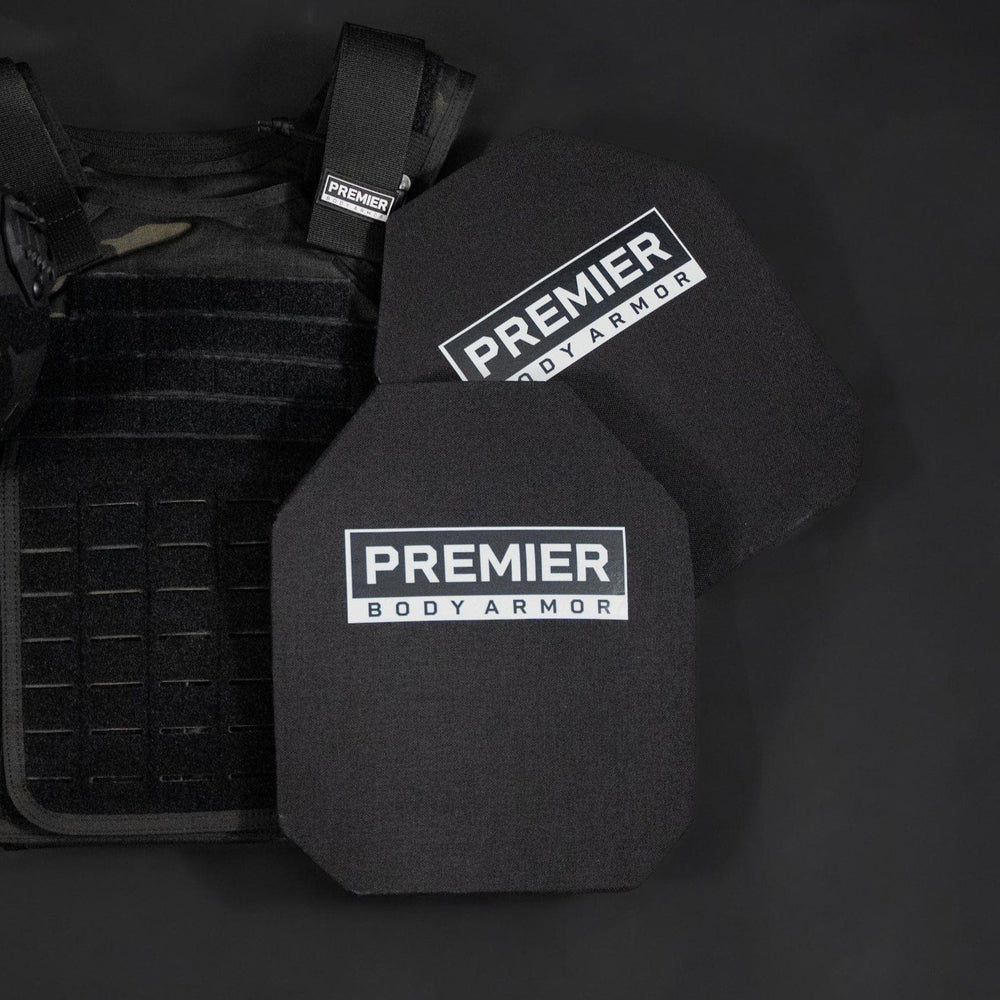
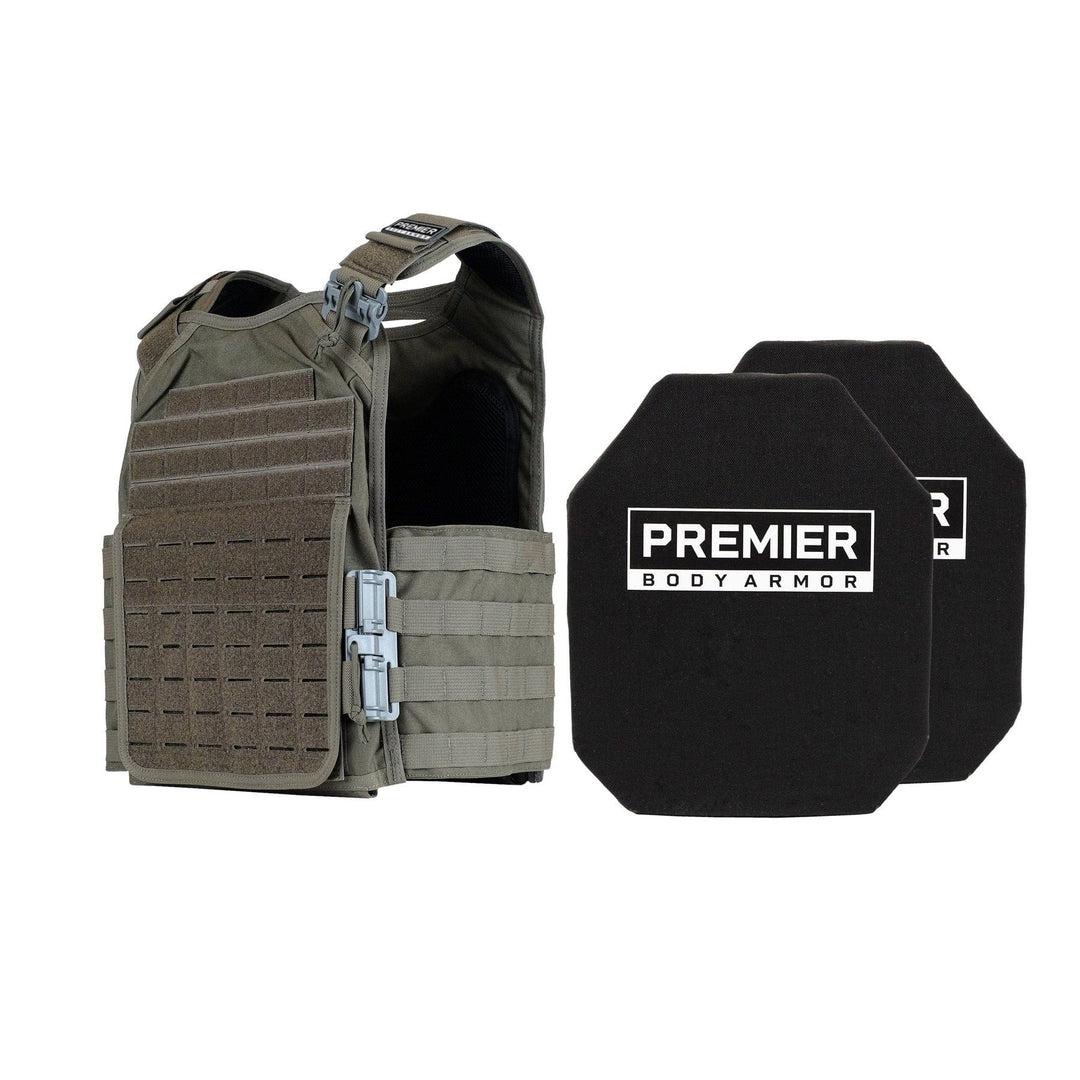
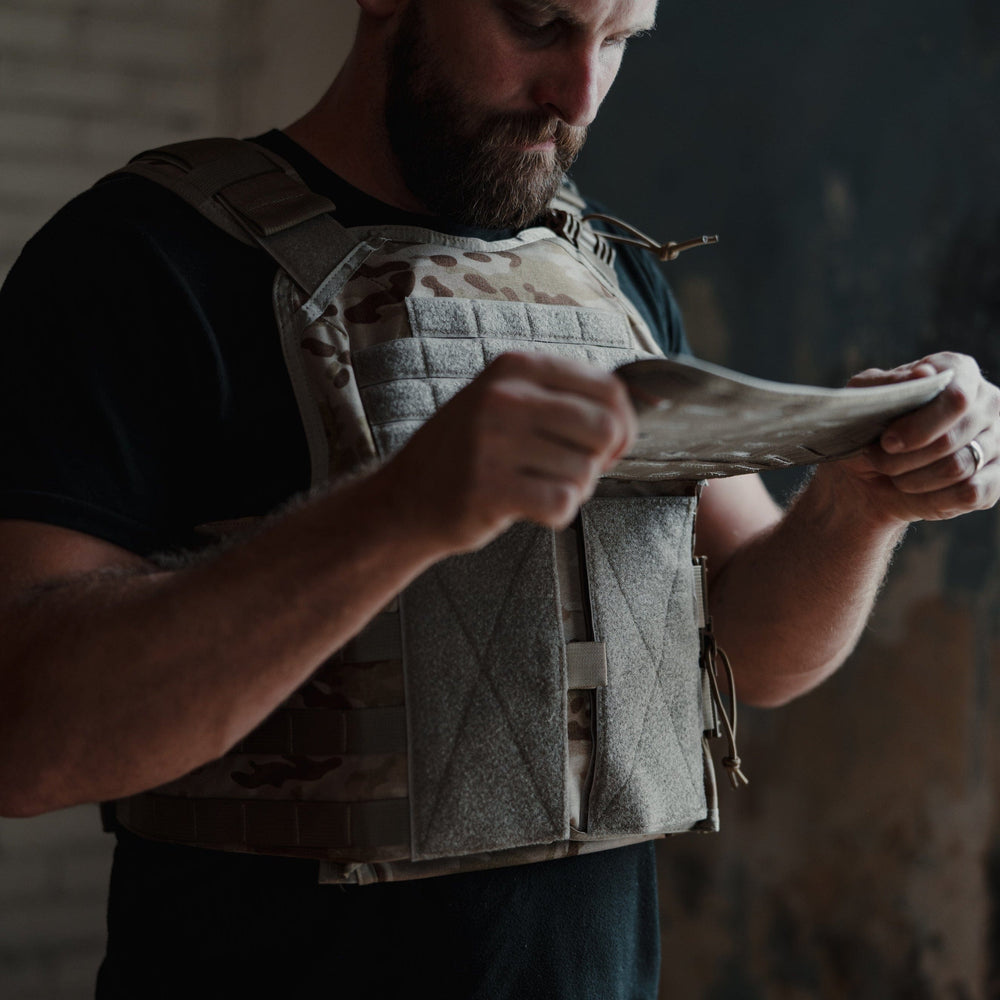
Searching for a “Level 4 vest”? Level IV protection doesn’t come from a soft, flexible vest; it comes from hard rifle plates worn in a plate carrier. No soft-armor vest is rated to stop armor-piercing rifle rounds; you get Level IV by loading hard plates into a carrier built for them. Start with a Level IV plate carrier and add your plates.
Premier’s Level IV plates are a standard 10"x12" shooter’s cut, so they fit standard plate carriers. Look for a carrier rated for hard plates and sized to your plate cut, with a cummerbund and shoulder straps that adjust to your body for a stable, comfortable fit.
If you’d rather not build piece by piece, the Fortis Level IV Loadout and the Level IV Core Mission Plate Carrier Bundle pair plates and a carrier together.
For more information on choosing the right plate carrier, read our article on setting up your plate carrier.
Level 4 Plates:FAQ
Can civilians own level 4 body armor?
Yes, civilians can legally purchase and own level 4 body armor in most states in the United States. However, some states have restrictions regarding body armor, so it's important to check the laws in your state before purchasing.
Many customers wonder if they have the same access to body armor as military personnel and law enforcement. As an industry leader in body armor innovation, we utilize the same technology that is currently available to the US military. If you are in search of a military bulletproof vest level 4, you don’t need to have any special connections with a military supplier. We offer a selection of plate carriers that can hold level 4 armor plates to create a level 4 vest.
How much does level 4 body armor weigh?
The weight of level 4 body armor can vary depending on the material used, but it typically weighs between 5 and 10 pounds per plate. This can make it quite heavy to wear for extended periods of time, so it's important to consider the weight when selecting a plate carrier and body armor system.
What’s the difference between Level IV and RF3?
Both provide protection against the same .30-06 M2 AP rifle threat. “Level IV” is the rating under the old NIJ 0101.06 standard; “RF3” is the equivalent highest rifle level under the newer NIJ 0101.07 standard. Premier’s plates meet NIJ 0101.06 Level IV and the new NIJ 0101.07 RF3. Certified RF3 designations will follow as the 0101.07 Compliant Products List is published (as of June 2026, no armor has been officially certified under the new 07 standard).
How Much Does Level 4 Body Armor Cost?
The cost of level 4 plates varies depending on materials, size, and quality, but can range from several hundred dollars to over one thousand dollars. If you're looking for more affordable yet still high quality level 4 plates and accessories, check out our Fortis product line.
Is level IV body armor concealable?
Body armor level 4 is typically not concealable, as it is designed to provide maximum protection and coverage. Ballistic plates level 4 are larger and thicker than lower-level armor, so they are not as easily hidden under clothing. However, there are some specialized carriers and systems that are designed for covert use. Our Discreet Plate Carrier is designed to be worn discreetly under plain clothing.
Are level IV plates bulletproof?
No body armor is completely bulletproof. Level 4 body armor is designed to completely stop high-powered rifle rounds, but it may not be effective against more rare types of ammunition. Level IV plates are more than enough for virtually all people’s needs.
Are Level 4 plates stab proof or knife resistant?
Level 4 body armor is not designed to be stab-proof or knife resistant. While the plates may provide some level of protection against sharp objects, they are not specifically designed for this purpose. If you need protection against knives or other sharp objects, consider purchasing specialized body armor.
Do I need a spall liner for my Level 4 plate?
A spall liner is not required for the best level 4 body armor, but it is highly recommended, especially with steel plates. When a high-powered bullet strikes a plate, it can cause fragments of the plate to break off and fly in all directions. A spall liner is a layer of material that helps to contain these fragments, reducing the risk of injury to the wearer.
Many plate carriers come with spall liners, but if yours doesn't, it's important to purchase one separately. Our plates all come equipped with a protective coating that helps serve as spall protection. This combined with the polyethylene means there is no need for a spall liner with Premier's plates like with traditional steel plates.
frequently asked questions
We will sell body armor to civilians, Law Enforcement Officers, and Military Personnel in the United States who meet the following criteria:
1. Are 18 years of age or older
2. Are not a felon;
3. Are legally allowed to possess and use the item(s) in your state (If you are a New York or Connecticut resident, you must be active Law Enforcement or Military Personnel and provide necessary credentials);
4. Are purchasing this product for only lawful purposes;
5. Are purchasing this product on your own behalf;
6. Comply with all other Terms & Conditions.
Learn more about the legality of body armor in each state.
STRATIS Plates have an 8-year warranty. Fortis plates have a 7-year warranty. Soft body armor panels (for vests and backpacks) have a 5-year warranty, and each carrier has a 2-year warranty.
For warranties on specific products, please see the product page.
All products (excluding clearance items) are eligible for an easy return or exchange if initiated within 30 days of receipt, and the product(s) is in new, unused condition.
There is no re-stocking fee for returns or exchanges. The customer is responsible for any return shipping costs associated with returning the product.
Read more about our returns & exchange information.